


Blog Detail

Plastic Strip vs Paper Strip vs Wire-Welded Coil Nails: Which Collation System Should You Produce?
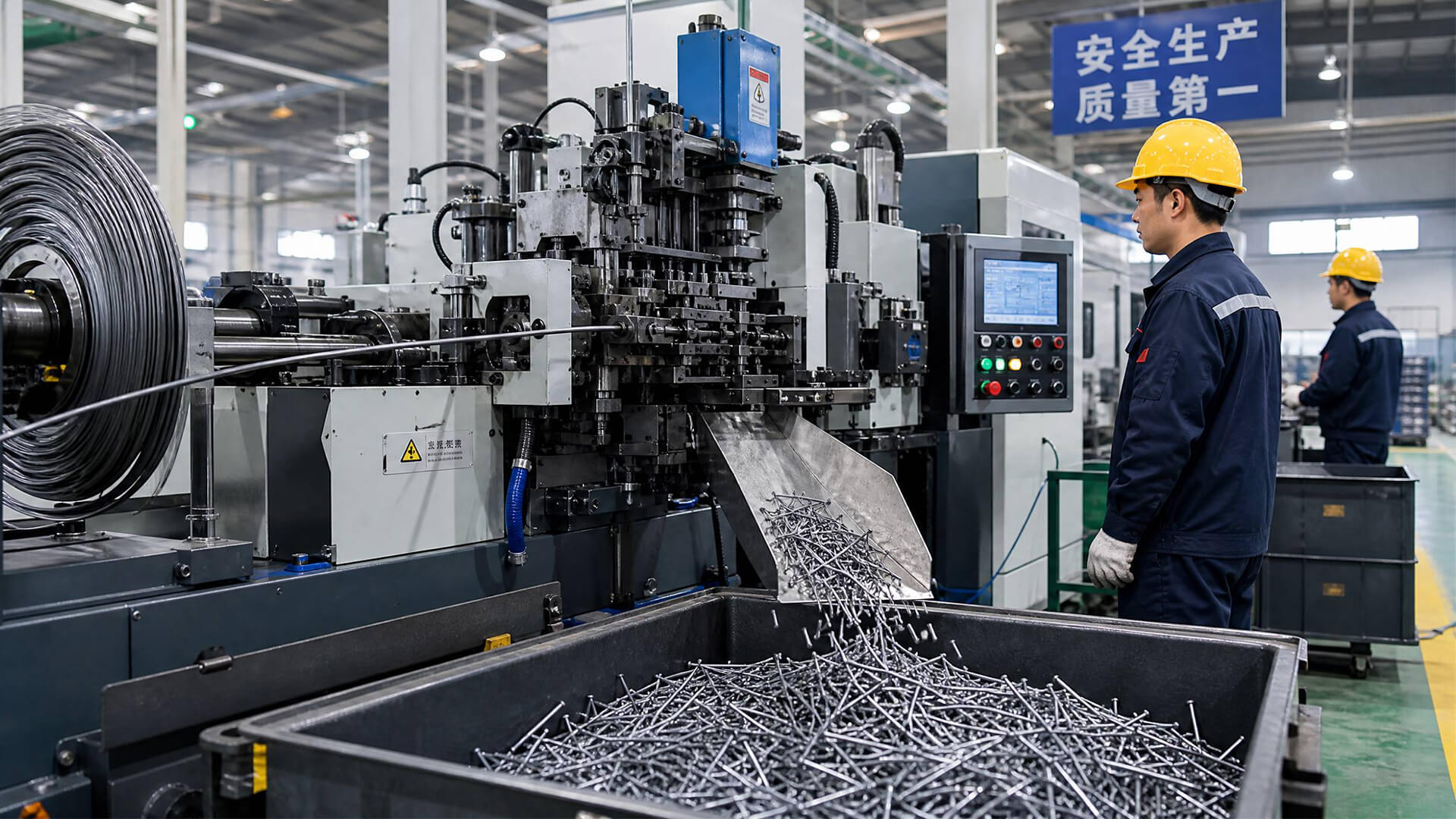
Collated nails are used with pneumatic nailers to help users load and drive multiple nails efficiently. However, not all collated nails are made in the same way. Plastic strip nails, paper strip nails and wire-welded coil nails use different joining materials, product formats and collating processes.
For a nail manufacturer, choosing a collating machine should begin with the target market and the nail gun specification—not simply the machine's maximum speed.
This guide compares the three common formats, explains how each is produced and shows what to confirm before selecting a collating machine.
Quick Answer: What Is the Difference Between Plastic Strip, Paper Strip and Wire-Welded Coil Nails?
The main difference is the material and format used to hold individual nails together:
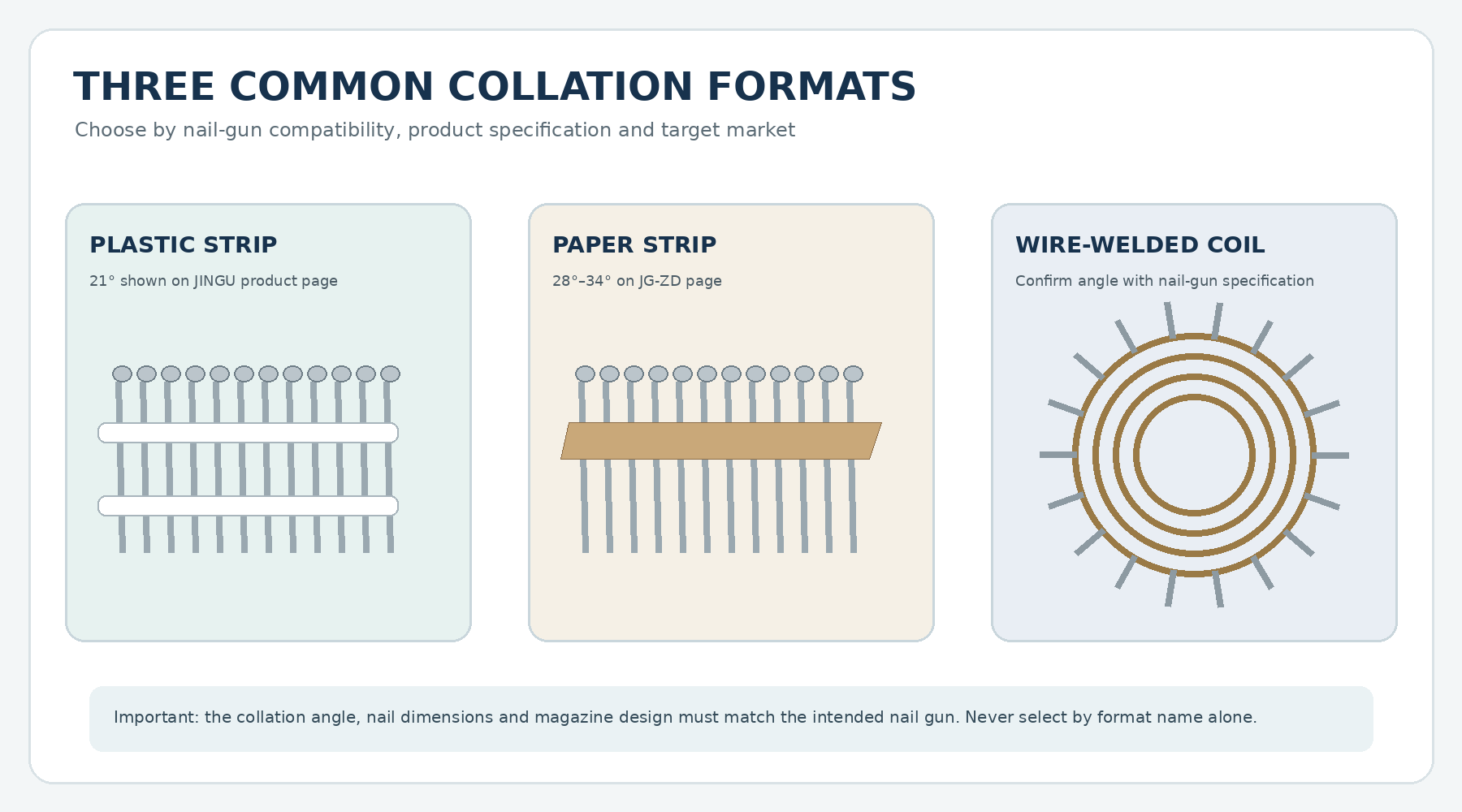
· Plastic strip nails are joined by a formed plastic strip. The JINGU product page lists a 21° configuration.
· Paper strip nails are joined by paper tape. JINGU's JG-ZD page lists a 28°–34° nail angle.
· Wire-welded coil nails are joined by welding wires and wound into coils. The required angle and coil format must match the target nail gun.
The correct format depends on nail-gun compatibility, nail dimensions, application, local market demand, joining-material availability and the production capacity required.
1. What Are Collated Nails?
Collated nails are individual nails connected into a strip or coil so they can be loaded into a compatible pneumatic nail gun.
Compared with loose nails, collated nails can support faster fastening work and reduce the need for frequent manual loading. They are commonly used in construction, timber framing, pallet manufacturing, wooden packaging, roofing and other applications where pneumatic fastening is required.
The nail gun determines important product requirements, including:
· Collation angle.
· Nail length and shank diameter.
· Head type and shank design.
· Magazine and feed geometry.
· Strip or coil format.
Never assume that two nails are interchangeable simply because they have the same diameter and length. Confirm the nail-gun model or provide a physical sample before finalizing production.
2. Plastic Strip Nails: How They Work
Plastic strip nails are arranged at a specified angle and joined with a plastic strip. The plastic material holds the nails in position so the strip can be fed into a compatible nail gun.
The JINGU plastic strip nail machine page describes automatic nail alignment and bonding through plastic strip forming. The page lists a 21° nail angle and a configuration for nails with a 2.5–4.0 mm diameter range. The listed length range includes 50–100 mm, with an additional 100–160 mm range shown in the product information; confirm the exact configuration for the required nail size.
Typical Characteristics
· Plastic strip joining material.
· Fixed nail angle according to the selected machine and nail-gun requirement.
· Suitable for compatible construction, furniture and wooden packaging applications.
· Requires suitable plastic strip material and correct forming conditions.
· The strip and nail alignment should be checked to ensure stable feeding in the nail gun.
3. Paper Strip Nails: How They Work
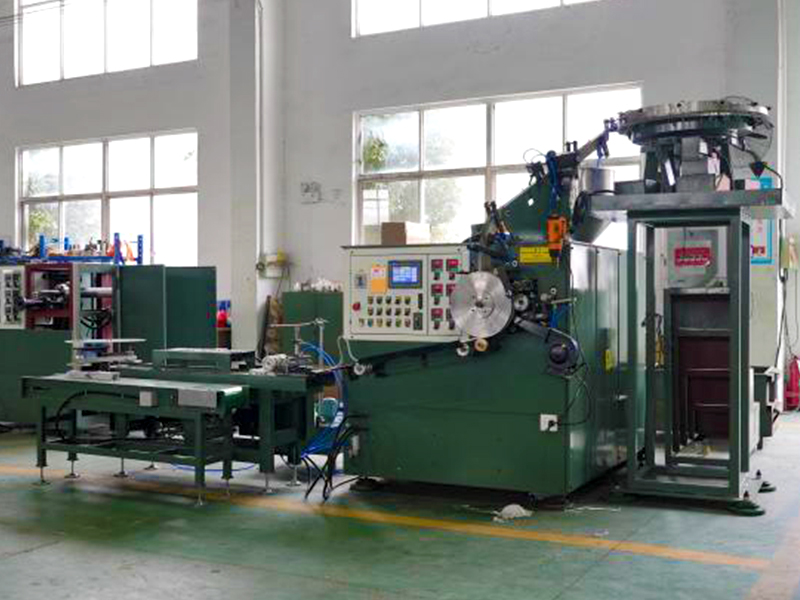
Paper strip nails are connected by paper tape or paper-based collation material. The nails are arranged at the required angle, and the paper strip is bonded to hold them together.
JINGU's JG-ZD paper strip nail machine page lists a nail angle of 28°–34°, a nail diameter range of 2.5–4.0 mm and a nail length range of 50–100 mm.
Typical Characteristics
· Paper tape joining material.
· Nail angle configured within the machine's stated range.
· Used for compatible framing and construction nail applications.
· Requires suitable paper tape, adhesive bonding and process control.
· Moisture exposure and storage conditions should be considered when selecting the paper collated product for a target market.
The JG-ZD page describes automatic sorting and feeding, a closed cooling circuit for paper forming, uniform alignment and adhesive bonding. These features should be evaluated together with the target nail sample and nail-gun specification.

4. Wire-Welded Coil Nails: How They Work
Wire-welded coil nails are connected by thin welding wires and wound into a coil. The JINGU JG-GZ coil nail making machine is designed to arrange, weld and coil loose nails automatically. Its product page also describes automatic coiling, rubber-band binding and finished-coil delivery.
The published JG-GZ nail range is:
· Nail diameter: 1.8–4.0 mm.
· Nail length: 25–100 mm.
· Total power: 12 kW.
· Machine weight: 2,000 kg.
· Overall dimensions: 4,500 × 3,500 × 3,000 mm.
· Power supply shown in the technical table: AC 380–440 V.
The coil angle, coil diameter, nails per coil and welding-wire arrangement should be confirmed against the intended nail gun and the customer's product sample. Do not assume one coil specification fits every tool.

5. Comparison: Plastic Strip vs Paper Strip vs Wire-Welded Coil Nails
Comparison point | Plastic strip nails | Paper strip nails | Wire-welded coil nails |
Joining material | Plastic strip | Paper tape / paper-based strip | Welding wires |
Finished format | Straight nail strip | Straight nail strip | Wound nail coil |
JINGU page angle reference | 21° | 28°–34° on JG-ZD | Confirm with nail-gun specification |
JINGU machine | Plastic Strip Nail Machine | Paper Strip Nail Machine JG-ZD | Coil Nail Making Machine JG-GZ |
Main process | Align nails and form/bond plastic strip | Align nails and bond paper tape | Align nails, weld with wire and wind into coils |
Key selection issue | Plastic material and strip compatibility | Tape bonding and storage conditions | Welding quality, coil geometry and nail-gun compatibility |
The comparison is a selection guide, not a universal product standard. The target nail-gun specification and approved nail sample take priority over general format descriptions.
6. Which Collated Nail Type Is Right for Your Market?
Choose Plastic Strip Nails When:
· Your target customers use nail guns designed for the required plastic-strip angle and geometry.
· Your main products fall within the confirmed machine range.
· You can source suitable plastic strip material consistently.
· The target application and customer requirements accept plastic collation.
Choose Paper Strip Nails When:
· Your target market uses nail guns designed for paper-tape collated nails.
· The required nail angle and dimensions fall within the machine's confirmed range.
· Paper tape and adhesive materials are available at a suitable cost.
· Storage and transport conditions can protect the collated strips from excessive moisture.
Choose Wire-Welded Coil Nails When:
· Your customers use compatible coil nailers.
· The required product is supplied in coil format.
· The nail dimensions, coil diameter, nails per coil and welding-wire arrangement are confirmed.
· The factory has sufficient loose-nail supply and the required coil inspection and packing process.
The best option is the one that matches real local demand and the nail-gun standard used by your customers. Do not choose a collating format only because a machine has a higher advertised speed.
7. What Machines Are Needed for Each Collated Nail Production Process?
All three processes start with correctly formed loose nails. The collating machine does not normally replace the nail making machine.
A typical production route is:
Steel wire → Nail making → Optional shank rolling / finishing → Collating → Inspection → Packing
The exact order of polishing and shank rolling should be confirmed by product sample. For example, a ring-shank or screw-shank nail needs the correct shank-forming operation, and the selected finishing process must preserve that profile.
Plastic Strip Nail Production
The production section typically includes a nail making machine, suitable feeding and sorting equipment, a plastic strip collating machine, the required plastic material and finished-strip inspection.
See the JINGU Plastic Strip Nail Machine.
Paper Strip Nail Production
The production section typically includes a nail making machine, feeding and sorting equipment, a paper strip collating machine, paper tape and adhesive-related process control, followed by strip inspection and packing.
See the JINGU Paper Strip Nail Machine JG-ZD.
Wire-Welded Coil Nail Production
The production section typically includes a nail making machine, suitable loose-nail supply, optional shank rolling and finishing equipment, a wire coil collator, welding wire, coil handling and packing.
See the JINGU Coil Nail Making Machine JG-GZ and our existing coil nail production line guide.
8. JINGU Collating Machine Selection References
The following values are taken from the current JINGU product pages. They are published machine references, not a guarantee that every nail specification will run at the maximum listed speed.
Machine | Nail diameter | Nail length | Other published information |
Plastic Strip Nail Machine | 2.5–4.0 mm | 50–100 mm; page also shows 100–160 mm option | 21°; 13 kW; 380 V; 1,600 kg |
Paper Strip Nail Machine JG-ZD | 2.5–4.0 mm | 50–100 mm | 28°–34°; 12 kW; 3-phase AC380 V; 2,000 kg |
Coil Nail Making Machine JG-GZ | 1.8–4.0 mm | 25–100 mm | 12 kW; AC380–440 V; 2,000 kg |
Before quoting, confirm the exact nail range, angle, output, tooling, utilities and installed dimensions for the required configuration. The JG-GZ product page currently shows different maximum-speed figures in its introductory text and technical section, so the rated speed should be confirmed with JINGU before it is used in a formal quotation or marketing claim.
9. How to Balance Collating Capacity with Nail Making Capacity
A collating machine cannot run continuously if the nail making section does not supply enough suitable loose nails.
The line should be balanced around acceptable finished strips or coils—not just the maximum speed of one machine.
Check:
· Practical loose-nail output by size.
· Whether the collator can process the same nail dimensions and shank design.
· Planned running hours and changeover time.
· Scrap and rejection during setup.
· Availability of welding wire, plastic strip or paper tape.
· Finished-product inspection and packing capacity.
For a coil nail project, the JINGU coil nail production line guide explains how to match nail forming, optional rolling, finishing and coil collation.
For upstream nail machine selection, see our high-speed nail making machine range.
10. Common Mistakes When Selecting a Collating Machine
Mistake 1: Choosing the Machine Before Checking the Nail Gun
The nail angle, magazine design and nail geometry must be compatible with the customer's tool.
Mistake 2: Comparing Only pcs/min
A machine's rated speed does not equal the complete line's saleable output. The supply of loose nails, changeovers, rejected strips or coils and packing capacity all matter.
Mistake 3: Ignoring Joining Materials
Plastic strip, paper tape and welding wire have different purchasing, storage and process requirements.
Mistake 4: Forgetting the Nail Shank Design
Smooth, ring and screw shank nails may require different upstream processing and tooling.
Mistake 5: Ordering a Collator Without a Loose-Nail Supply Plan
The nail making section must provide enough correctly formed nails for the collator to operate.
11. What Information Should You Send for a Collated Nail Machine Quotation?
Prepare the following information before contacting the machine supplier:
· Collation type: plastic strip, paper strip or wire-welded coil.
· Nail diameter and length.
· Nail angle required by the nail gun.
· Head type, point type and shank type.
· Surface finish and material.
· Nails per strip or nails per coil.
· Coil diameter or strip length, where applicable.
· Target output per shift or per day.
· Working hours and number of shifts.
· Available loose-nail supply or nail making machine model.
· Voltage, frequency, phase and compressed-air supply.
· Photos, drawings or physical samples of the target nails and nail gun.
If you are not sure which format is suitable, send the nail-gun model and a sample of the finished nail. The machine configuration can then be checked against the actual product.
Frequently Asked Questions
What is the difference between plastic strip and paper strip nails?
Plastic strip nails are held together by a formed plastic strip, while paper strip nails are held together by paper tape or paper-based material. Their angles and nail-gun compatibility may differ.
Are paper strip nails and coil nails made on the same machine?
No. Paper strip collators arrange nails into straight strips, while wire-welded coil collators join nails with welding wires and wind them into coils. They are different production systems.
What angle does the JINGU plastic strip nail machine use?
The current JINGU product page lists a 21° configuration. Confirm the exact angle and nail-gun compatibility for the order.
What angle does the JINGU JG-ZD paper strip nail machine support?
The current JG-ZD technical table lists 28°–34°. The final setup should match the target nail and nail gun.
Does the JG-GZ coil nail machine make the nails as well as collate them?
The JG-GZ is the coil nail collating machine. It arranges and welds already formed loose nails into coils. A complete production line also needs a suitable nail making section and reliable nail supply.
Can one collating machine produce different nail sizes?
Potentially, within the confirmed working range and with the required tooling and adjustments. Send the full nail size list before ordering.
Which collated nail type is best for a new factory?
There is no universal best option. Select the format used by your target customers and compatible with their nail guns. Then compare raw material, consumables, machine investment and expected sales volume.
Select the Right Collating System with JINGU
JINGU supplies equipment for plastic strip nails, paper strip nails and wire-welded coil nails. The correct configuration depends on your target nail sample, nail-gun specification, required output and factory conditions.
Send us your nail dimensions, collation angle, target production and reference photos. JINGU can review the suitable collating machine and the upstream nail making equipment.
Explore the Plastic Strip Nail Machine, Paper Strip Nail Machine JG-ZD, Coil Nail Making Machine JG-GZ, or contact JINGU to discuss your project.
Related Blogs
-
 When choosing a nail making machine, one of the most important questions is:How many nails can the machine produce per hour?However, nail production capacity cannot be judged only by the machine's maximum speed.A complete production calculation should consider:Machine speed in pcs/minNail diameterNa
-
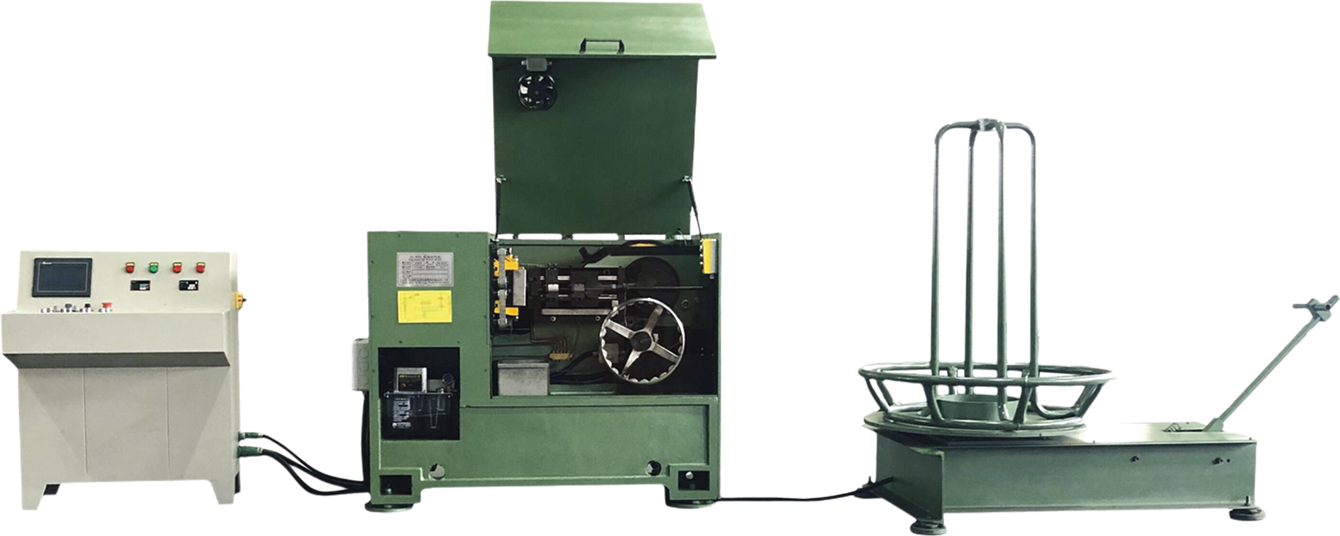 This guide explains how to start a nail manufacturing business, including nail making machines, wire drawing machines, complete nail production lines, production processes, factory requirements, and cost factors. Learn how to build an efficient nail factory with the right equipment.
-
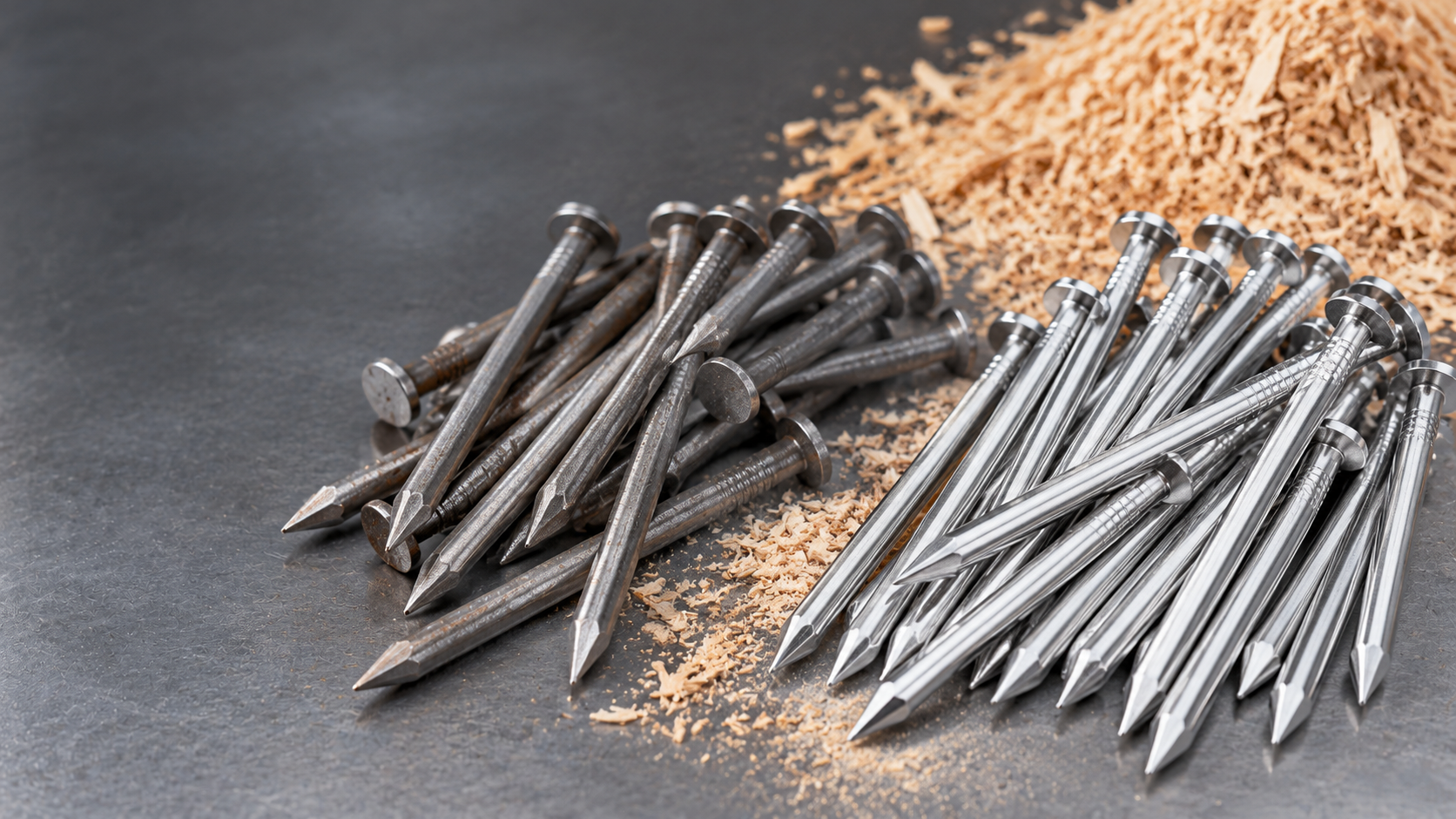 How to Choose a Nail Polishing Machine for Wire Nails: Capacity, Process & Surface FinishA nail making machine forms the nail, but the production process does not always end when the nail leaves the forming machine. Depending on the required appearance and the next production stage, loose wire nails


