


Blog Detail

Coil Nail Production Line: Which Machines Do You Need and How Do You Size Them?
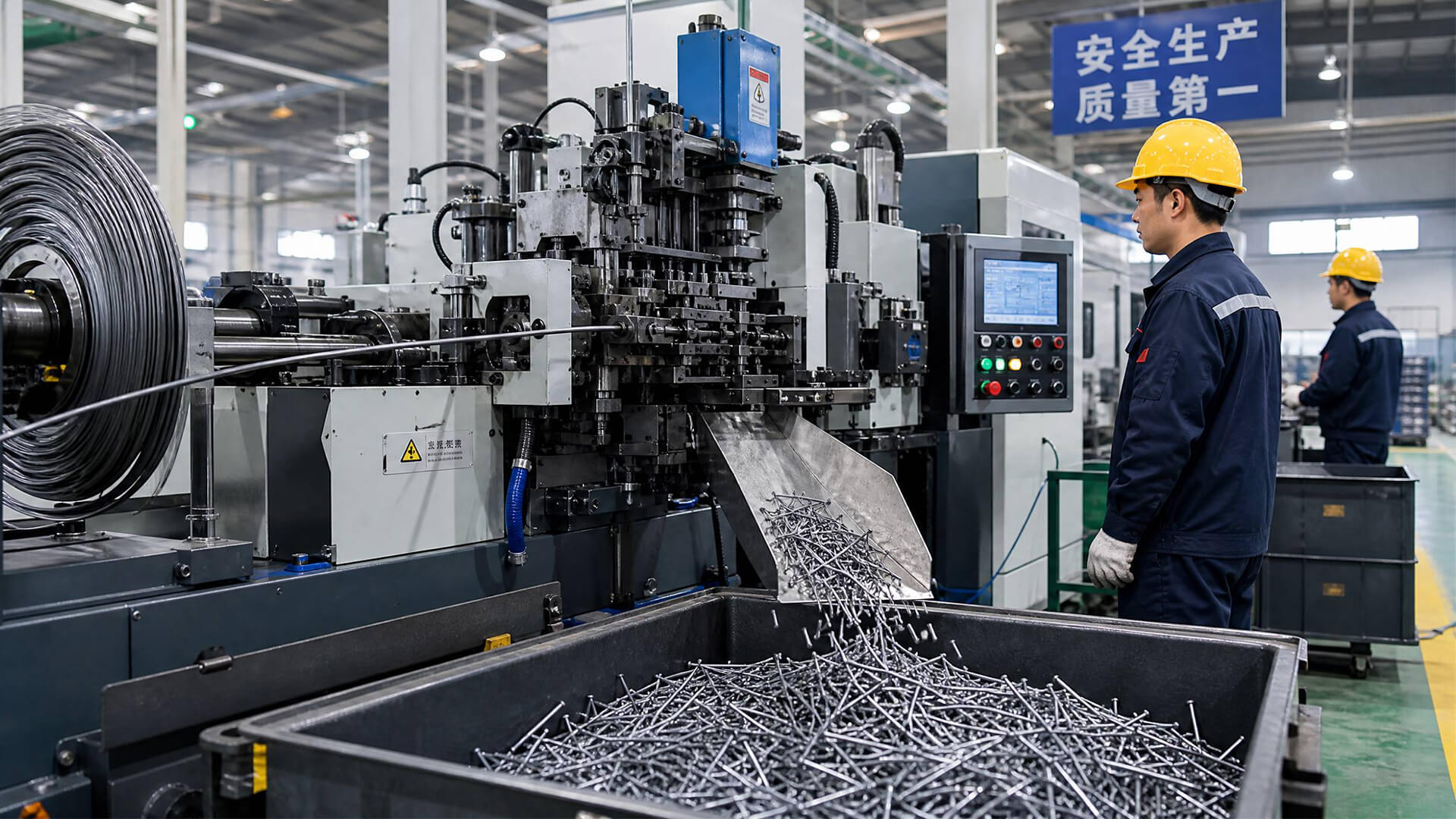
A buyer asking for a “coil nail machine” may mean a machine that forms individual nails or a machine that welds those nails into coils. These are separate production stages. Ordering a fast collator without enough correctly sized nails to feed it will leave capacity idle; ordering several nail machines without a collation plan can create piles of work in progress.
A sound coil nail production line begins with one defined product, a daily target in saleable coils or tonnes, and an agreed process for the wire and finish. The machines can then be selected and balanced around that target.
Quick answer: what equipment is needed for coil nails?
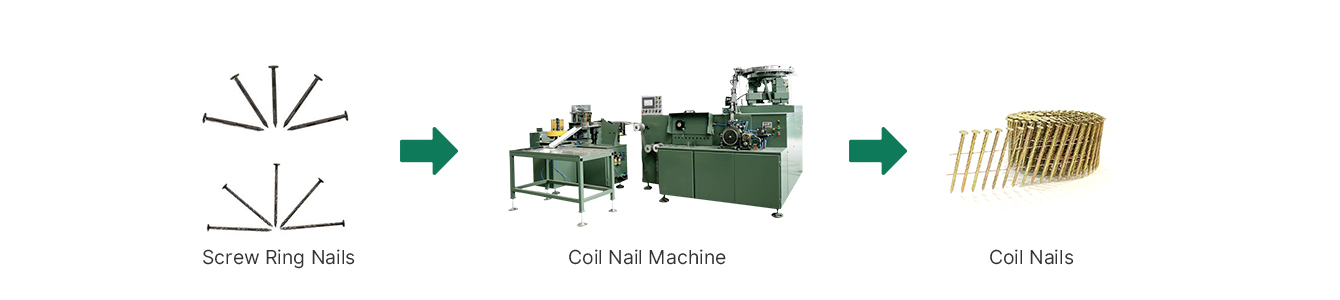
At minimum, a factory needs suitable finished nail wire, a nail making machine to form loose nails, and a coil nail collating machine to arrange and join them. Cleaning or polishing, shank rolling, feeding and packaging are added according to the nail design and production arrangement. If the factory buys wire rod instead of finished nail wire, wire drawing becomes an upstream process.
Coil nail production is therefore a line design question, not a single machine model selection. A quotation should identify each stage, what enters and leaves it, and which auxiliary items are included.
Define the exact coil nail before selecting machines
Write a product specification that can be checked with a sample. Include shank diameter and length, head and point design, smooth/ring/screw shank, surface finish, collation angle, welding wire arrangement, nails per coil, coil diameter and packaging. If the buyer uses a particular nail gun, send its required nail specification and a reference coil. Compatibility should be tested, not assumed from the term “coil nail.”
Separate the volume by product. For example, a factory may plan one smooth shank pallet nail and a smaller batch of ring shank nails. The two products may use the same collator within its confirmed range, but they have different tooling, possible rolling needs, changeovers and finished coil requirements. A combined tonnes-per-day target hides those differences.
Map the equipment to the product
The practical process can be expressed as finished wire → nail forming → cleaning or polishing as required → optional shank forming → wire coil collation → coil inspection and packing. The actual placement of cleaning, shank forming and any specified surface treatment should be validated with production samples. Steel coating is a separate process to specify with a qualified supplier where required; it is not implied by a nail making or collating machine quotation.
Stage | Main purpose | Specify before quotation |
Wire supply or drawing | Supply wire for each nail diameter | Inlet material, finished diameter, coil condition and hourly supply |
Nail forming | Make loose nails with the agreed head and point | Nail sizes, usable output, tooling and wire quality |
Cleaning and polishing | Prepare the formed nails for the required appearance and downstream process | Load, cycle time, surface requirement and handling |
Shank rolling, if required | Form ring or screw shanks | Pattern, nail range, sample, tooling and usable throughput |
Coil collation | Arrange and weld loose nails into coils | Nail and coil dimensions, welding consumables, acceptable coil output |
Inspection and packing | Release saleable coils | Nail count, weld quality, packaging format and traceability |

The table is a project checklist. It does not imply that every step uses a dedicated machine or that every ancillary device is supplied in the base price.
Nail forming: make consistent loose nails
The nail machine determines the initial head, point, shank diameter and nail length. Match the product to its published working range and then confirm its actual setup with the supplier. JINGU's high speed nail making machines include different models for different nail ranges; a model's top pieces-per-minute figure is not a daily good-output guarantee for every size.
Cleaning and polishing: check the required finish
Formed nails may need oil or burr removal before packing or downstream handling. Select a cleaning or polishing process based on the finish required by the customer and the effect on shank features. JINGU lists nail polishing machines as a separate equipment family. For batch equipment, the relevant measure is usable kilograms per hour across the full cycle, including loading and unloading, not simply the kilograms that fit in the drum.
If the line includes ring or screw shanks, agree and test the finishing sequence. The chosen process should preserve the shank profile and leave nails fit for reliable feeding and welding. Where a particular coating is required, define its supplier, place in the route and acceptance criteria as a distinct project item.
Shank forming: include it only for the required nail design
Smooth shank nails do not need a rolling stage merely because they will be collated. Ring and screw shank products generally need correctly matched forming equipment and dies. JINGU's high speed thread rolling machine GGS-2000 is one possible product to evaluate for suitable sizes. Its published range and nominal pieces-per-minute figure should be checked against the actual nail, pattern and production trial.
Do not size this stage from the total factory output if only part of the product mix needs rolling. Calculate the daily ring and screw shank demand by specification, then include setup time and the output of acceptable rolled nails.
Collation: turn suitable loose nails into saleable coils
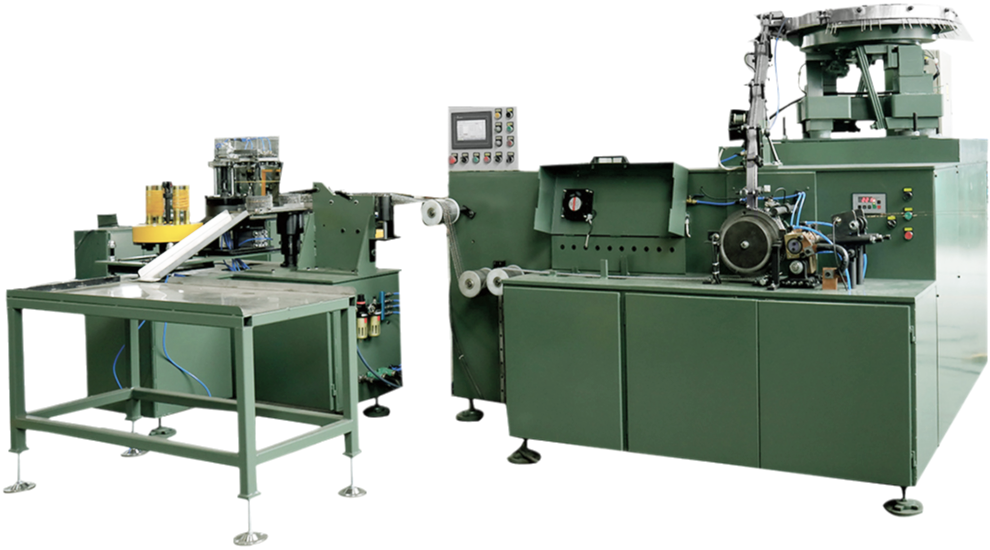
The collating machine arranges individual nails, joins them with welding wire and forms coils. JINGU's coil nail making machine JG-GZ is listed for nail diameters of 1.8–4.0 mm and lengths of 25–100 mm. Those ranges are a first screen. The quotation must also confirm head, shank, coil angle, nail count, feeding method and finished sample.
Balance the line by saleable coils
Use the same unit for every stage before comparing machines. Pieces per minute can be compared across nail making, shank rolling and collation for one product. Kilograms per hour are useful for wire preparation and polishing. Coils per shift are the commercial output. Convert only after defining nails per coil and measured nail mass.
For a transparent illustration, suppose a nail forming station sustains 600 nails per running minute on a specified product. The factory schedules eight hours, but the station produces for 80% of that time after planned stops. It therefore makes 600 × 60 × 8 × 0.80 = 230,400 nails in the shift. If the coil machine processes all of those nails and 95% become acceptable finished coils, the line has 218,880 acceptable nails. At 300 nails per coil, that equals 729 complete coils, with a partial coil remainder.
The example assumes the collator can handle the formed nails and that the 95% figure includes all collation losses. If the collator's usable output is lower, it becomes the limit. If rolling is required, include that stage's acceptable output. If a polishing batch takes longer than expected, nail supply may need a buffer. Keep the assumed running factor and quality yield separate so downtime is not deducted twice.
For the upstream estimate, use the method in JINGU's nail making machine production capacity guide, then replace assumed speed and nail mass with measurements for the selected product. To estimate required machine counts, divide the target good nails per shift by each stage's usable good output, round up, and check changeovers and maintenance capacity. An extra machine may be justified by product mix or resilience even when the arithmetic says one is sufficient.
Ask the supplier for one capacity sheet per priority size: machine model, tested or assumed running speed, scheduled hours, planned run time, quality yield, nails per coil and expected saleable coils. This is more useful than adding the maximum speeds printed in several catalogs.

Plan handling, utilities and shipment
Draw the route through the workshop: wire storage, nail making, intermediate bins, finishing, shank rolling if used, coil welding, finished coil inspection and packing. Mark space for safe operator access, material movement, coil changes, tooling and maintenance. Decide whether nails feed automatically between stages or move in batches, and price the handling equipment explicitly.
Request the electrical specification for every machine, including voltage, frequency, phase, connected power and any proposed customization. Confirm the site's compressed air and other utilities against the final model drawings. Coordinate floor loading and access with the installer. For export projects, installed dimensions are not packing dimensions: ask for shipping dimensions after any approved partial disassembly, container loading drawings and a reassembly plan. The JG-GZ product page lists a substantial installed envelope, so its shipping arrangement deserves early review.
What to send for a useful coil nail line quotation
Send a short product and factory brief covering:
1. Finished coil nail drawing or sample: shank diameter, length, head, point, shank pattern, finish, angle, nails per coil and packing.
2. Volume by product: target saleable coils or tonnes per day, hours per shift, shifts per day and expected growth.
3. Material: available finished wire or wire rod, grade, diameters, coil weights and supply reliability.
4. Site: voltage, frequency, phase, available floor plan and compressed air arrangements.
5. Commercial scope: which machines and tools to quote, whether feeding and packing are needed, spare parts, training and acceptance tests.
If the target market is still being researched, label the proposed nail sizes and outputs as provisional. A first quotation can then show a sensible starting line and the assumptions that must be confirmed before ordering.
Frequently asked questions
Can one coil nail collating machine produce several nail sizes?
Potentially, within its confirmed nail and coil range and with the appropriate tooling and settings. Ask the manufacturer to list every required size, any change parts and the changeover procedure. Do not assume a full product range from one maximum diameter and length specification.
Do I need a thread rolling machine for smooth shank coil nails?
No rolling stage is needed solely to collate smooth shank nails. Add it when the ordered product requires a ring, screw or another formed shank, and confirm the pattern by sample.
Does a coil nail machine make the loose nails as well?
The JG-GZ collating stage works with already formed nails. A complete line also needs nail forming and a reliable source of suitable nail wire. Confirm this division of scope in every quotation.
Is the collator's rated speed the line output?
No. Finished output is limited by the usable supply and quality of formed nails, any required finishing or rolling stage, collator run time and acceptable coils after inspection.
Can I order a line using only nail length and diameter?
Those are a starting point. Head, point, shank design, finish, coil geometry, nail count and intended tool compatibility affect the equipment and tooling. A physical reference sample reduces ambiguity.
Should wire drawing be included in the first phase?
That depends on whether consistent finished nail wire is available locally at the required diameters and volume. Compare purchasing finished wire with drawing rod in-house before including a drawing line.
Request a line plan for your actual coil nail products
A useful proposal shows how much of each priority product the full line can deliver, how it will be tested and which machines and auxiliary items are included. Send your nail samples, wire details, output target and operating schedule to contact JINGU. We can review the nail forming, optional shank rolling and collation stages and prepare a project-specific equipment scope.
Related Blogs
-
 Coil Nail Production Line: Which Machines Do You Need and How Do You Size Them?A buyer asking for a “coil nail machine” may mean a machine that forms individual nails or a machine that welds those nails into coils. These are separate production stages. Ordering a fast collator without enough correct
-
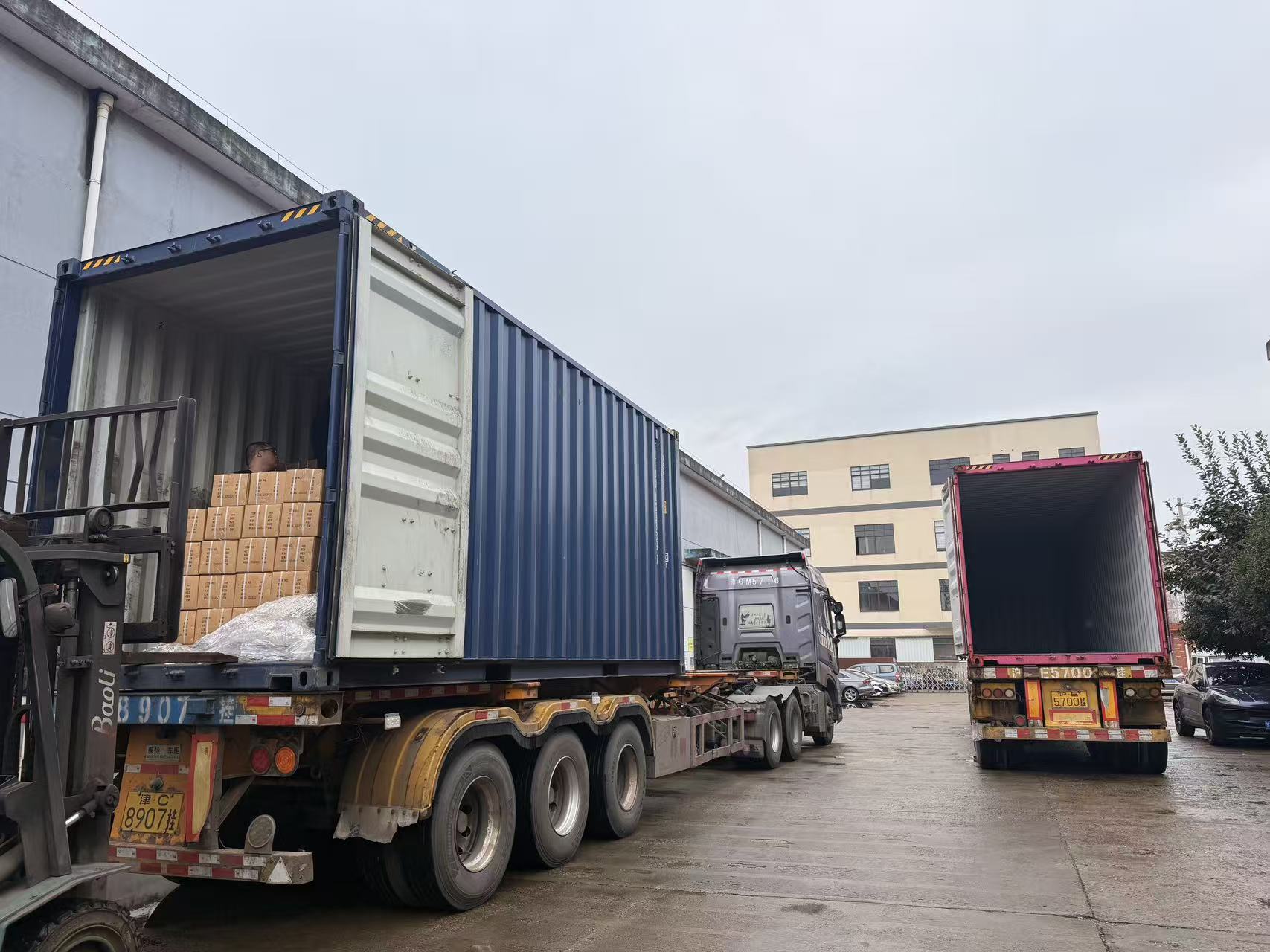 Three Containers of Steel Strip Nail Equipment and Wire Loaded for Southeast AsiaOn 28 September 2026, JINGU Machinery loaded three containers for shipment to Southeast Asia. The dispatch included three sets of steel strip nail production equipment and 20 tonnes of steel wire. Photos from the worksh
-
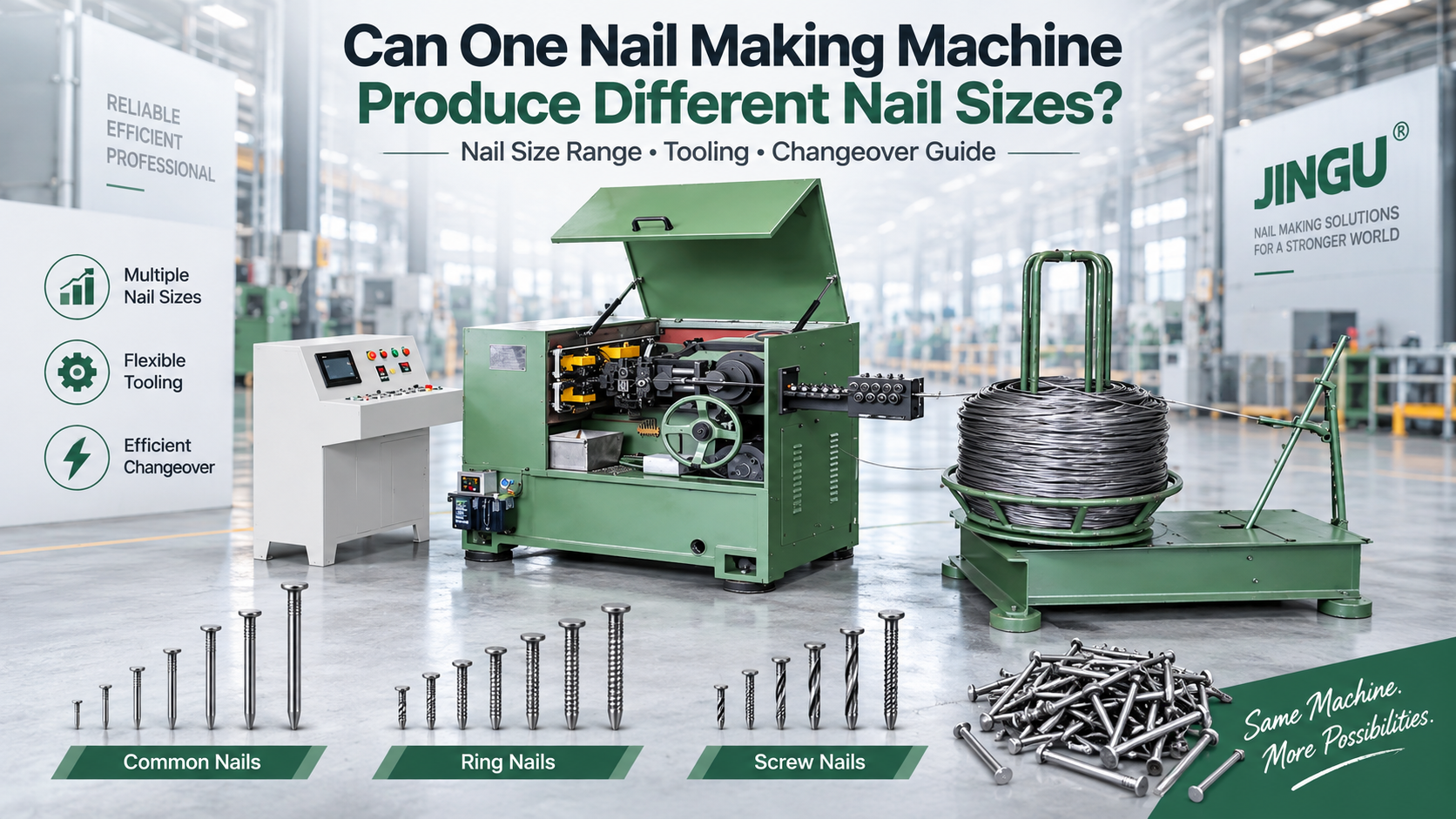 Can One Nail Making Machine Produce Different Nail Sizes? Nail Size Range, Tooling & Changeover GuideWhen planning a nail factory, one of the most common questions is:Can one nail making machine produce different nail sizes?The short answer is yes.One nail making machine can normally produce several
-
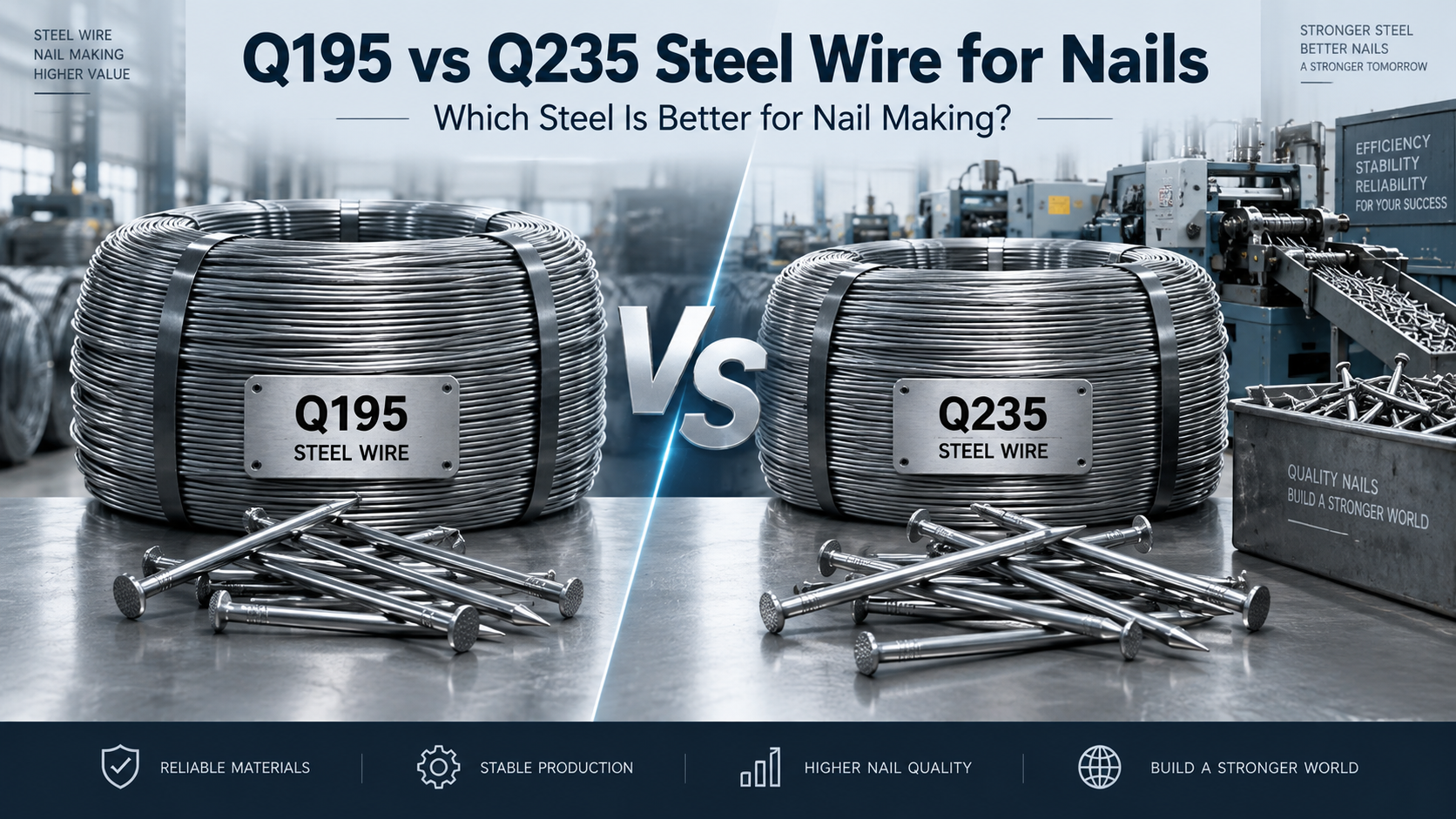 Q195 vs Q235 Steel Wire for Nails: Which Steel Is Better for Nail Making?Choosing the correct steel wire is one of the first technical decisions when establishing a nail manufacturing factory.Many investors ask:Should I use Q195 or Q235 steel wire for nail production?Both grades are commonly discuss


