


Blog Detail

How to Calculate Nail Making Machine Production Capacity: PCS/Min, KG/Hour & Tons/Day
When choosing a nail making machine, one of the most important questions is:
How many nails can the machine produce per hour?
However, nail production capacity cannot be judged only by the machine's maximum speed.
A complete production calculation should consider:
Machine speed in pcs/min
Nail diameter
Nail length
Weight of each nail
Operating efficiency
Working hours
Machine model
For nail manufacturers, kg/hour and tons/day are usually more useful than pcs/min alone, because different nail sizes have different weights.
In this guide, we explain how to calculate nail making machine production capacity step by step.
1. What Does Nail Making Machine Production Capacity Mean?
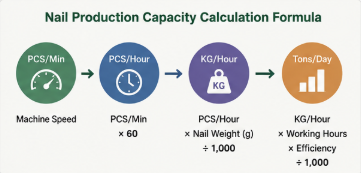
Nail machine production capacity can be expressed in several ways:
Pieces Per Minute
PCS/min indicates how many nails the machine can theoretically produce in one minute.
For example:
800 pcs/min
means the machine can produce 800 nails per minute under the specified operating conditions.
Pieces Per Hour
To calculate theoretical pieces per hour:
Pieces/hour = PCS/min × 60
For a machine running at 800 pcs/min:
800 × 60 = 48,000 pcs/hour
Kilograms Per Hour
For a nail factory, kg/hour is usually more meaningful.
The calculation is:
KG/hour = Pieces/hour × Weight of One Nail ÷ 1,000
The weight of one nail depends mainly on its diameter and length.
Tons Per Day
Daily production can be calculated as:
Tons/day = KG/hour × Working Hours × Operating Efficiency ÷ 1,000
This gives a more realistic estimate of factory production.
2. Why PCS/Min Is Not Enough to Calculate Nail Output
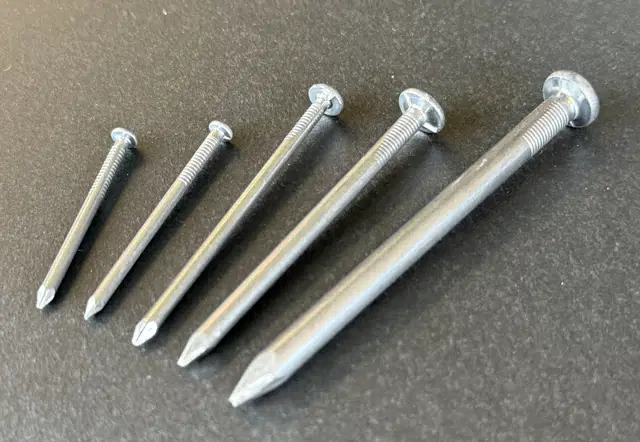
Two nail machines can operate at the same speed but produce different kilograms of nails.
For example, consider:
1.8 × 20 mm nails
2.3 × 50 mm nails
3.0 × 75 mm nails
The heavier nail requires more steel for each piece.
Therefore, even if two machines produce the same number of nails per minute, their kg/hour output can be very different.
This is why nail manufacturers should calculate production based on the actual nail specification.
3. The Basic Nail Production Capacity Formula
There are four basic steps.
Step 1: Calculate Pieces Per Hour
PCS/hour = Machine Speed × 60
Example:
800 pcs/min × 60 = 48,000 pcs/hour
Step 2: Determine Nail Weight
The weight of one nail should be determined according to the actual nail diameter and length.
For accurate factory planning, the actual finished nail weight or a reliable engineering calculation should be used.
Step 3: Calculate Theoretical KG/Hour
If one nail weighs 8 grams:
48,000 × 8 ÷ 1,000 = 384 kg/hour
Therefore, the theoretical output is:
384 kg/hour
Step 4: Apply Operating Efficiency
A nail machine normally does not operate at maximum speed continuously.
If the planned operating efficiency is 90%:
384 × 90% = 345.6 kg/hour
Therefore, the estimated practical output is:
345.6 kg/hour
4. Example: 2.5 × 50 mm Common Nails
JINGU's high-speed nail making machine page currently states a production reference of 760 kg per 8 working hours for standard 2.5 mm × 50 mm common nails.
This corresponds to an average production of:
760 ÷ 8 = 95 kg/hour
This is a useful real-world reference because it is based on a specific nail size and working period rather than only a theoretical pcs/min speed.
The actual production of a particular machine can vary depending on operating conditions, nail specifications, raw material, tooling and production efficiency.
For this reason, when asking for a production quotation, always provide the exact nail size.
5. What Factors Affect Nail Making Machine Output?
Several factors influence actual production.
Nail Diameter
Larger diameter nails normally have greater weight per piece.
Nail Length
Longer nails require more steel wire per piece.
Machine Speed
A higher speed can increase the number of pieces produced per hour, provided the machine can maintain stable operation at that speed.
Raw Material Quality
Wire diameter consistency and material quality affect machine stability and finished nail quality.
Tooling Condition
Cutters, punches, clamping dies and other wear parts affect production stability.
Operator Experience
Correct machine adjustment and timely maintenance can reduce downtime.
Operating Efficiency
Actual production includes time for:
Machine adjustment
Wire replacement
Tool changes
Lubrication
Cleaning
Maintenance
Troubleshooting
Therefore, maximum machine speed should not automatically be treated as actual factory output.
6. JINGU High Speed Nail Making Machine Production Range
JINGU currently offers four high-speed nail making machine models for different nail sizes.
Model | Nail Diameter | Nail Length | Maximum Speed |
|---|---|---|---|
JG-D70 | 1.8–2.5 mm | 25–70 mm | 850 pcs/min |
JG-D90 | 1.8–3.5 mm | 40–90 mm | 800 pcs/min |
JG-D130 | <4.5 mm | 75–130 mm | 550 pcs/min |
JG-D160 | <5.5 mm | 130–160 mm | 450 pcs/min |
These machine speeds are maximum specifications. Actual kg/hour production must be calculated according to the nail size and operating conditions.
For complete machine specifications, see our High Speed Nail Making Machine.
7.How Many Kilograms Can a Nail Machine Produce Per Hour?
Use this formula:
KG/hour = PCS/min × 60 × Nail Weight (g) ÷ 1,000
For example:
Machine speed:
800 pcs/min
Nail weight:
8 g
Calculation:
800 × 60 × 8 ÷ 1,000 = 384 kg/hour
At 90% operating efficiency:
384 × 90% = 345.6 kg/hour
Estimated practical output:
345.6 kg/hour
This calculation method can be used for different nail sizes.
8. How Many Tons Can a Nail Machine Produce Per Day?
Suppose the practical production is:
345.6kg/hour
and the machine operates:
8 hours/day
Then:
345.6 × 8 = 2764.8 kg/day
or:
2.76 tons/day
If the factory operates multiple machines, multiply the daily production by the number of machines.
For example:
2.76 tons/day × 4 machines = 11.04 tons/day
This is a simple way to estimate the required number of machines for a production target.
9. How Many Nail Making Machines Do I Need?
The required number of machines depends on:
Target daily production
Nail size
Machine model
Operating hours
Operating efficiency
Future production requirements
A simple calculation is:
Number of Machines = Target Daily Production ÷ Production Per Machine Per Day
For example:
Target:
5 tons/day
Estimated production per machine:
2.76 tons/day
Then:
5 ÷ 2.76 = 1.81
In practice, the factory would normally need to evaluate whether four machines provide sufficient capacity and whether additional spare capacity is required for maintenance or future growth.
For a precise machine recommendation, send JINGU your nail diameter, nail length and target daily production.
10. Why Actual Production Can Be Lower Than Maximum Speed
Maximum machine speed is not the same as guaranteed production.
A machine may be capable of 800 pcs/min, but the factory may choose to operate at a lower speed depending on:
Nail specifications
Raw material
Tooling
Product quality requirements
Operator experience
Maintenance schedule
A stable production line with consistent quality is often more valuable than simply operating at the highest possible speed.
JINGU's high-speed nail making machines are designed with precision wire feeding, double clamping and other structures intended for stable continuous production.
11. What Information Should You Provide for a Production Calculation?
If you want a machine manufacturer to calculate your production capacity, provide:
Nail Diameter
Example:
2.5 mm
Nail Length
Example:
50 mm
Target Production
Example:
3 tons/day
Available Raw Wire
Example:
6.5 mm steel wire rod
Working Hours
Example:
8 hours/day
Electricity Standard
Example:
380 V / 50 Hz
With this information, the manufacturer can recommend the appropriate nail making machine model and calculate the approximate production capacity.
12. Production Capacity Is Only One Part of Machine Selection
A high production capacity is important, but it should not be the only selection criterion.
Manufacturers should also consider:
Nail size range
Finished nail quality
Machine stability
Tool life
Electricity consumption
Maintenance
Spare parts
Technical support
Future expansion
For this reason, our Nail Making Machine Buying Guide 2026 explains the other factors that should be evaluated before purchasing a machine.
13. Frequently Asked Questions
How many nails can a nail making machine produce per minute?
The maximum speed depends on the machine model. JINGU's current high-speed models range from 450 to 850 pcs/min according to the specified technical data.
How many nails can a nail making machine produce per hour?
Multiply the machine speed by 60. For example, a machine running at 400 pcs/min has a theoretical output of 24,000 pcs/hour.
How do I calculate kg/hour?
Use:
KG/hour = PCS/min × 60 × Nail Weight (g) ÷ 1,000
Then apply a realistic operating efficiency for practical production planning.
How many tons per day can one nail making machine produce?
There is no single answer. It depends on nail size, machine model, operating speed, working hours and efficiency.
Is the maximum machine speed the actual production?
No. Maximum speed is a technical specification. Actual production is affected by tooling, raw material, machine adjustments, maintenance and operating efficiency.
Can JINGU calculate the production capacity for my nail size?
Yes. Send us your nail diameter, nail length and target production, and we can evaluate the suitable machine configuration.
Get Your Nail Production Capacity Calculation
Planning a nail factory and not sure how many machines you need?
Send us:
Nail Diameter:
Nail Length:
Target Production:
Raw Wire Diameter:
JINGU can help you evaluate the suitable nail making machine model and production configuration.
Request a Nail Machine Quote
Related Blogs
-
 Q195 vs Q235 Steel Wire for Nails: Which Steel Is Better for Nail Making?Choosing the correct steel wire is one of the first technical decisions when establishing a nail manufacturing factory.Many investors ask:Should I use Q195 or Q235 steel wire for nail production?Both grades are commonly discuss
 -
 Nail Manufacturing Cost per Ton: Wire, Electricity, Labor & Machine CostsStarting a nail manufacturing business is not simply about buying a nail making machine.For investors planning a new nail factory, one of the most important questions is:How much does it cost to manufacture one ton of nails?The
 -
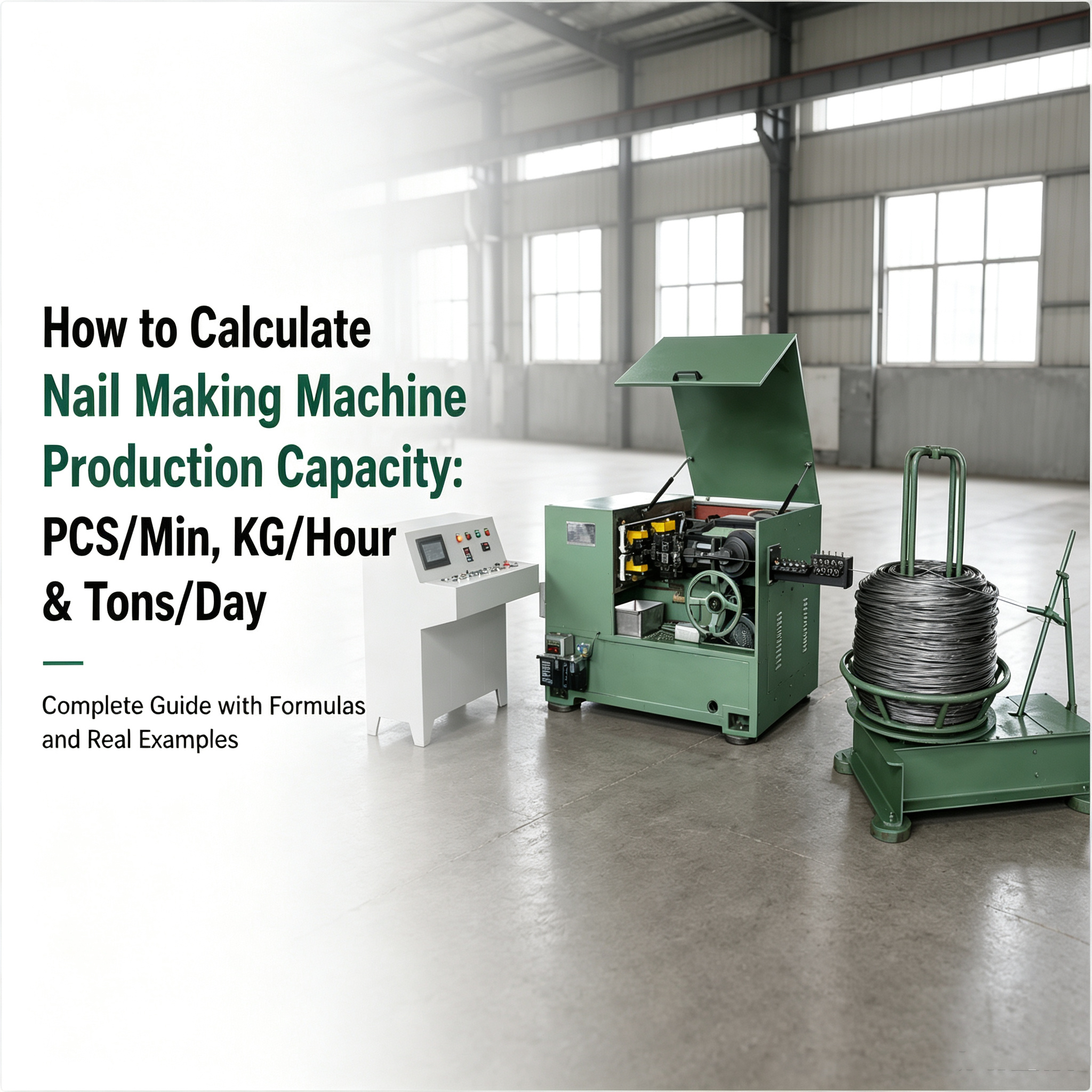 When choosing a nail making machine, one of the most important questions is:How many nails can the machine produce per hour?However, nail production capacity cannot be judged only by the machine's maximum speed.A complete production calculation should consider:Machine speed in pcs/minNail diameterNa
 -
 Nail Making Machine Buying Guide 2026: How to Choose the Right Machine for Your FactoryChoosing the right nail making machine is one of the most important decisions when starting or expanding a nail manufacturing business.Many investors make the mistake of selecting a machine only based on price or


