


Blog Detail

Nail Making Machine Maintenance Guide: Daily, Weekly & Monthly Checklist
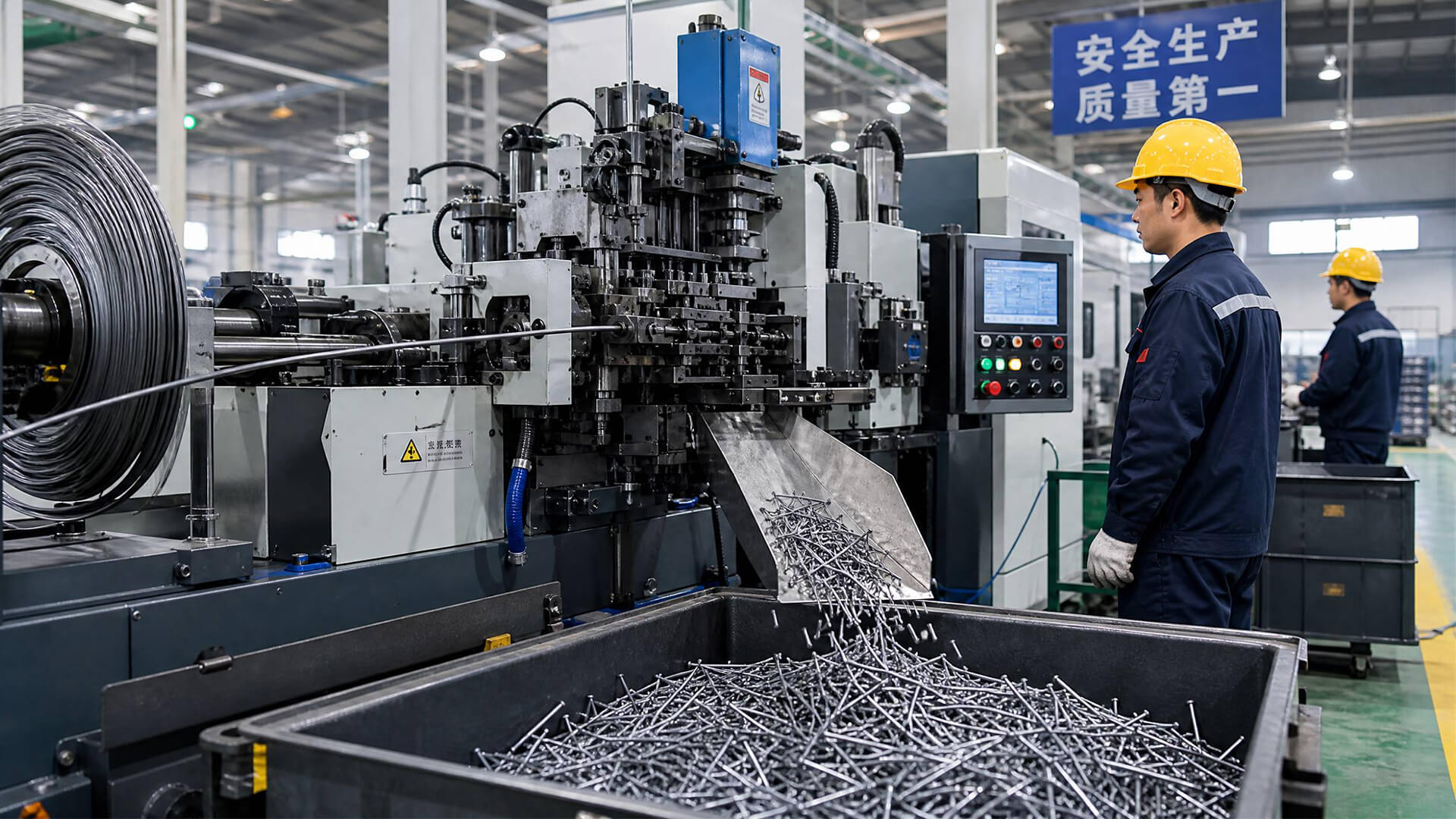
A nail making machine may run for many hours every day, continuously feeding steel wire, cutting it, forming the nail head and point, and discharging finished nails. Stable production therefore depends not only on machine design, but also on correct inspection, lubrication, tooling management and operator habits.
For nail factories, maintenance has a direct effect on four things: output, nail quality, tooling life and production cost per ton.
A machine that is cleaned, inspected and serviced on schedule is easier to keep stable than a machine that is only repaired after a breakdown.
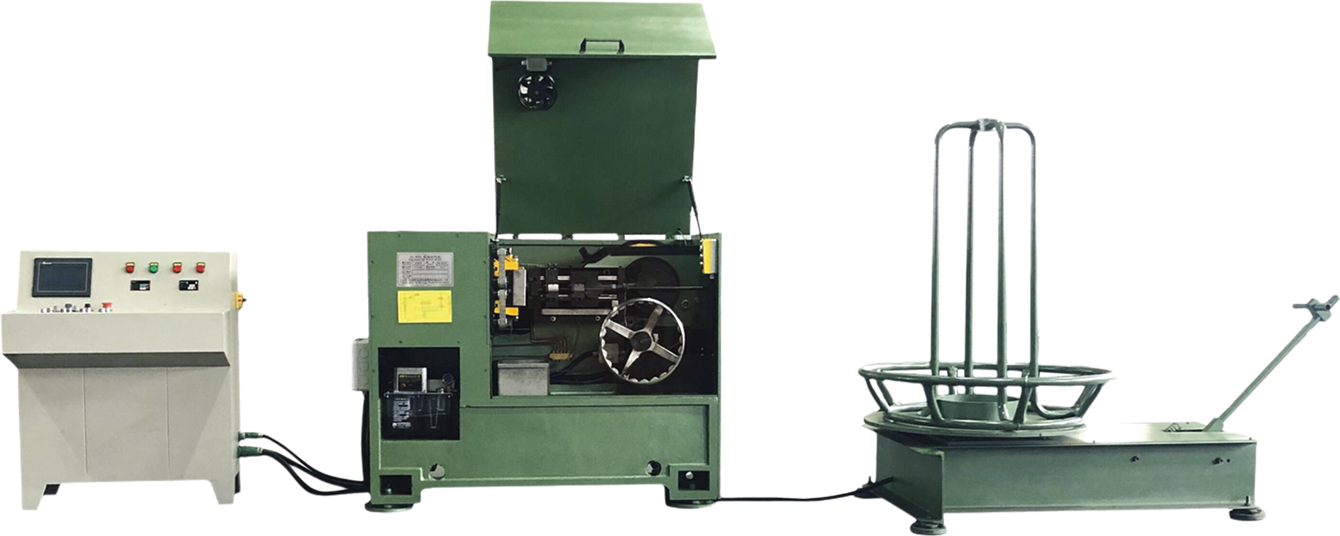
This guide explains a practical maintenance structure for automatic and high-speed nail making machines, including daily, weekly and monthly checks, wear-part inspection, spare-parts planning and a basic troubleshooting sequence.
Quick answer: Daily maintenance should focus on cleaning, lubrication, wire feeding and finished nail quality. Weekly maintenance should focus on cutters, punches, clamping dies, feeding components and fastening points. Monthly maintenance should include a deeper inspection of transmission, bearings, lubrication, electrical components and spare-parts inventory. Always follow the specific machine manual and local safety procedures.
For machine specifications and available models, explore JINGU's high-speed nail making machines.
1. Why Nail Making Machine Maintenance Matters
Maintenance is not only about preventing a machine from stopping.
It also helps control:
· Nail length consistency
· Nail head quality
· Nail point quality
· Wire feeding stability
· Tooling consumption
· Material waste
A small production problem can become expensive when the machine is running continuously.
For example, if a feeding component begins to slip, the first symptom may only be a small change in nail length. If the operator does not notice it, the factory may produce a large quantity of out-of-specification nails before the problem is corrected.
Similarly, a worn cutter may first create rough nail points or burrs. Continuing production can increase rejects and place unnecessary load on nearby components.
Preventive maintenance is therefore part of quality control, not a separate activity.
For factories calculating real output, remember that maintenance and tooling changes are part of practical operating efficiency. See our nail making machine production capacity guide for PCS/min, KG/hour and tons/day planning.
2. Safety Before Maintenance or Adjustment
Before inspecting or adjusting moving components, the machine should be stopped and isolated according to the equipment manual and the factory's safety procedure.
Only trained personnel should perform mechanical or electrical work.
Basic principles include:
· Stop the machine before reaching into the forming area.
· Isolate electrical power before maintenance that requires access to moving or energized components.
· Do not bypass guards or safety devices.
· Do not make several major adjustments at the same time when diagnosing a problem.
· Record the original setting before changing a critical adjustment.
Electrical inspection should be carried out by qualified personnel.
3. Daily Nail Making Machine Maintenance Checklist
Daily checks should focus on conditions that can change during every production shift.
3.1 Clean Nail Scrap and Metal Debris
Remove visible wire pieces, nail scraps, metal particles and production residue from the areas around:
· Wire feeding
· Straightening rollers
· Cutting area
· Clamping/forming area
· Finished nail discharge
· Machine base
Keeping these areas clean makes abnormal wear, oil leakage and loose parts easier to identify.
Do not allow scrap to build up around moving parts.
3.2 Check the Lubrication System
Lubrication is essential for high-speed moving components.
Before production, check the lubrication level and confirm that the lubrication system is working as intended.
JINGU's published high-speed machine specifications list 32# gear oil for the lubrication system. The actual oil, oil quantity and service procedure should always follow the manual supplied with the specific machine.
Check for:
· Low oil level
· Abnormal leakage
· Blocked or damaged lubrication lines
· Contaminated lubricant
· Areas that appear dry or unusually hot
Do not substitute lubricant only because another oil is easier to purchase locally.
3.3 Check Wire Feeding
Stable nail production begins with stable wire feeding.
Observe whether the wire enters the machine smoothly and whether the feeding system is operating consistently.
Watch for:
· Wire slipping
· Wire backing
· Irregular feeding
· Scratches on wire surface
· Unusual vibration
· Sudden nail length variation
JINGU's high-speed machines use dedicated wire feeding and anti-backing structures. Correct adjustment and stable raw material are still necessary for good performance.
3.4 Inspect Finished Nails During the Shift
Finished nails are one of the best indicators of machine condition.
Do not wait until the end of the shift to check product quality.
Inspect samples regularly for:
· Nail length
· Shank straightness
· Head position
· Head diameter and shape
· Nail point
· Burrs
· Surface marks
A sudden change in finished nail quality is often an early warning that tooling, wire feeding or raw material needs attention.
3.5 Listen for Abnormal Noise or Vibration
Operators become familiar with the normal sound of a machine.
A new knocking, scraping, irregular impact or vibration should be investigated rather than ignored.
A machine can continue producing nails while a component is already becoming loose or worn.
4. Weekly Nail Making Machine Maintenance Checklist
Weekly checks should go deeper than normal shift cleaning. For factories running two or three shifts, the interval should be adjusted according to actual operating hours rather than calendar time alone.
4.1 Inspect Nail Cutters
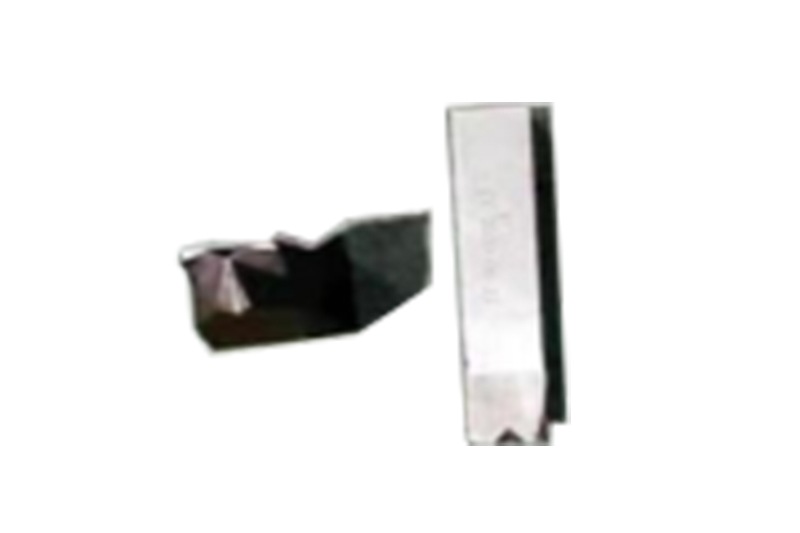
The cutter is a critical wear component because it separates the wire and helps form the nail point.
Check for:
· Rounded cutting edges
· Chips or cracks
· Uneven wear
· Burrs on finished nail points
· Poor or inconsistent point geometry
A cutter that is visibly worn should be serviced or replaced according to the manufacturer's procedure.
JINGU's high-speed nail making machine page uses a pendulum-type nail cutter holder designed to reduce mechanical wear and avoid cutter-to-cutter contact during correct operation.
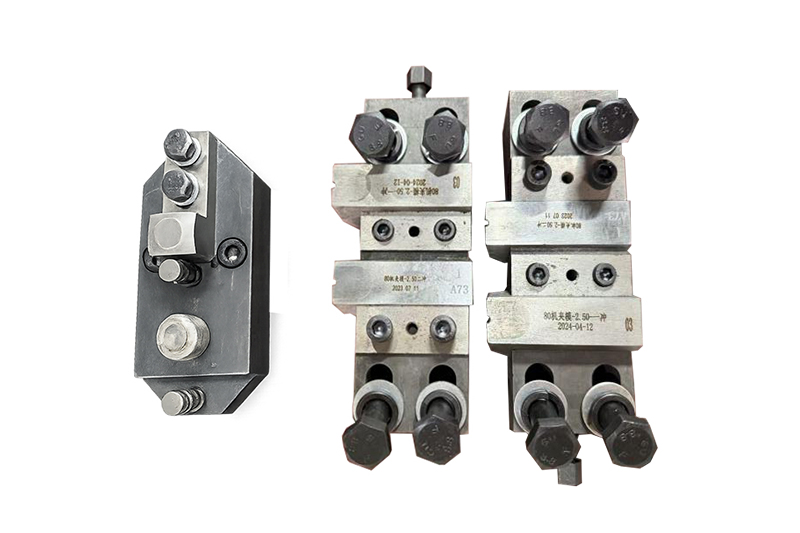
4.2 Inspect Punches and Clamping Dies
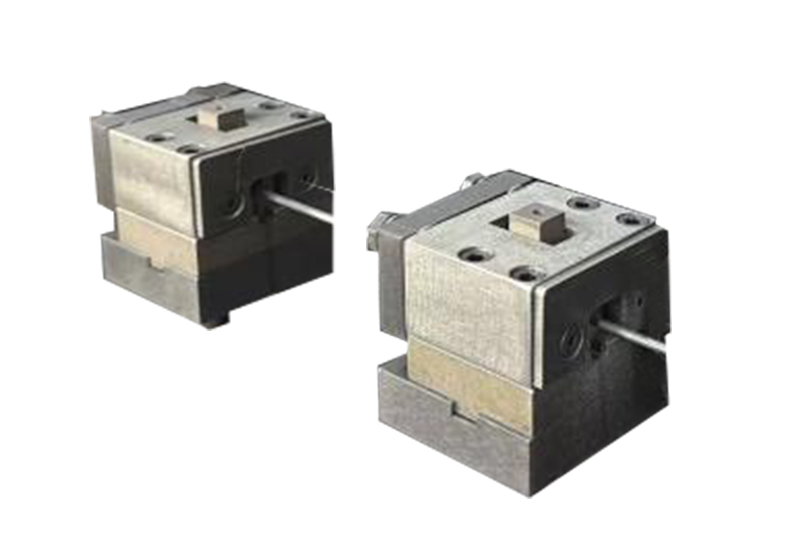
Punches and clamping dies are also important forming and wear components.
Inspect them for:
· Surface wear
· Cracks or impact marks
· Poor alignment
· Wire slippage
· Off-center or incomplete nail heads
The punch forms the nail head, while the clamping system holds the wire during forming.
If finished nails begin to show repeated head defects, these parts should be included in the diagnosis.
JINGU currently lists alloy steel and tungsten carbide as materials used for cutters, clamping dies and punches in its product FAQ. Exact tooling material depends on the supplied part and configuration.
4.3 Inspect Straightening and Feeding Components
Check the wire straightening rollers and feeding components for:
· Visible grooves
· Dirt or scale
· Uneven contact
· Loose adjustment
· Abnormal wire marks
Poor wire straightening can appear downstream as bent nails or unstable feeding.
4.4 Check Fasteners and Guards
High-speed operation creates repeated mechanical loads.
During scheduled maintenance, trained personnel should inspect appropriate fastening points, covers and guards according to the machine manual.
Do not change critical machine alignment simply because a fastener appears different from another machine. Confirm the correct setting first.
5. Monthly Maintenance Checklist
Monthly maintenance is a useful time for a deeper inspection. A factory operating 24 hours a day may need some of these checks more frequently.
5.1 Inspect Bearings and Transmission Components
Look for signs such as:
· Abnormal temperature
· Unusual noise
· Excessive vibration
· Leakage
· Looseness
· Irregular transmission behavior
If any of these conditions appear, diagnose the cause before continuing long-term high-speed production.
5.2 Inspect the Lubrication System More Thoroughly
Check:
· Oil condition
· Oil level
· Delivery lines
· Leakage points
· Lubrication delivery to specified areas
Insufficient lubrication may not stop the machine immediately, but it can accelerate wear.
5.3 Inspect Electrical Components
Qualified personnel should inspect relevant electrical components according to the manual and local electrical standards.
Typical inspection points include:
· Cable condition
· Loose terminals
· Sensors
· Abnormal alarm history
5.4 Review Spare-Parts Inventory
Do not wait for a production stoppage before checking whether critical parts are in stock.
Review consumption and maintain appropriate stocks of machine-specific wear parts.
6. Which Nail Making Machine Parts Wear Most Often?
Common production wear parts include:
Part | Main Function | Typical Warning Sign |
Nail cutter | Cuts wire and forms the nail point | Burrs, poor point, uneven cutting |
Punch | Forms nail head | Head deformation, off-center head |
Clamping die | Holds wire during forming | Wire slipping, unstable forming |
Feeding components | Controls wire feeding | Length variation, feeding instability |
Straightening components | Straighten incoming wire | Bent shank, unstable feeding |
7. How Raw Material Quality Affects Maintenance
Not every production problem is caused by the machine.
Wire quality can affect feeding, tooling life and finished nail quality.
Check:
· Wire diameter consistency
· Surface scale or rust
· Straightness
· Mechanical properties
· Coil condition
· Steel grade and supplier consistency
If a problem starts immediately after changing to a new coil or material batch, the raw material should be included in the investigation.
For material selection, see our Q195 vs Q235 Steel Wire for Nails guide.
8. Maintenance After Changing Nail Specifications
Changing nail size may require adjustments to feeding, clamping and tooling.
JINGU's current FAQ gives these typical references:
· Only nail length changes, wire diameter unchanged: approximately 3–5 minutes
· Wire diameter also changes: approximately 20 minutes to adjust the feeding assembly and clamping die
After changeover, do not immediately run a large production batch without checking sample nails.
Verify:
· Length
· Diameter
· Head shape
· Point quality
· Straightness
· Feeding stability
For a detailed size-change explanation, see Can One Nail Making Machine Make Different Nail Sizes?.
9. Keep a Maintenance and Tooling Record
A simple record can help identify repeated problems and real wear intervals.
Useful fields include:
Record Item | Example |
Date | 23 Oct 2026 |
Machine | JG-D90 No. 2 |
Nail size | 2.5 × 50 mm |
Running hours | 420 h |
Part inspected/replaced | Nail cutter |
Symptom | Point quality decreased |
Action | Cutter replaced |
Result | Normal production restored |
Over time, these records make it easier to answer practical questions such as:
· How long does a cutter last with a specific nail size?
· Which raw material batch creates more wear?
· Which machine requires more frequent adjustment?
· How much are tooling and maintenance costing per ton?
10. Basic Troubleshooting Sequence
When a problem appears, avoid changing many settings at once.
A simple diagnosis sequence is:
1. Confirm the symptom — What exactly changed?
2. Check the latest change — New wire coil? New tooling? New nail size? New operator setting?
3. Inspect incoming wire — Diameter, surface, straightness and coil condition.
4. Inspect tooling — Cutter, punch and clamping die.
5. Inspect feeding — Feeding stability, straightening and clamping.
6. Check lubrication — Correct level and delivery.
7. Run a controlled sample — Change one variable at a time and compare results.
This approach is more effective than randomly adjusting several machine parameters.
11. Common Symptoms and First Inspection Points
Symptom | First Items to Inspect |
Nail length varies | Wire feeding, slipping, feeding components, wire diameter |
Nail head is off-center | Punch, clamping, tooling alignment |
Nail point has burrs | Cutter condition and alignment |
Nail shank is bent | Wire straightening, raw wire, feeding alignment |
Machine noise increases | Fasteners, lubrication, bearings, transmission |
Scrap rate rises suddenly | Raw material batch, tooling, feeding, machine setting |
A detailed defect-by-defect guide is provided in our companion article Common Wire Nail Defects: Causes, Troubleshooting & How to Reduce Scrap
12. Spare Parts Planning for Nail Factories
The correct spare-parts package depends on:
· Number of machines
· Machine model
· Nail sizes
· Working shifts
· Distance from supplier
· Actual part consumption
Factories operating continuously should normally keep critical wear components available on site.
Common parts include cutters, punches, clamping dies and other model-specific components.
JINGU's product pages list a range of supplied accessories and spare parts, including cutters, punch/clamp dies, feeding components, main punches, punches and knives.
A spare-parts inventory is part of production planning, not only purchasing.
13. How Maintenance Affects Production Cost per Ton
Two factories can operate similar machines but achieve very different cost per ton.
A factory with stable maintenance can reduce:
· Unplanned downtime
· Defective products
· Emergency spare-parts freight
· Material scrap
· Secondary component damage
This is why machine purchase price alone does not determine production economics.
For a complete cost framework, see our Nail Manufacturing Cost per Ton guide.
Frequently Asked Questions
How often should a nail making machine be maintained?
Daily inspection should be part of every production shift. Deeper weekly and monthly checks should be adjusted according to actual running hours, operating conditions and the machine manual.
How often should nail cutters be replaced?
There is no universal fixed interval. JINGU provides approximately two months as a general reference for cutters, clamping dies and punches, while actual service life varies with wire quality, nail size, operating conditions and operator proficiency.
Why does my nail making machine produce uneven nail lengths?
Possible causes include unstable feeding, wire slipping, wire diameter variation, incorrect adjustment or wear in feeding-related components.
What causes an off-center nail head?
Possible causes include punch wear, clamping problems, tooling alignment and raw-material behavior. Inspect the defect and related forming components before changing multiple settings.
What spare parts should a nail factory keep?
Common critical wear parts include cutters, punches, clamping dies and machine-specific feeding or forming components. Stock level should be based on machine count, shifts and actual consumption.
Does steel wire quality affect maintenance?
Yes. Inconsistent diameter, poor surface condition or unsuitable mechanical properties can increase feeding problems, adjustment frequency, rejects and tooling wear.
Can JINGU provide technical support if the machine has a problem?
JINGU's current product FAQ states that online guidance and real-time video technical support are available for machine malfunctions.
Need Help Maintaining Your Nail Making Machine?
When contacting JINGU, send your machine model, nail specification, wire specification and clear photos or video of the problem.
JINGU can help evaluate machine condition, tooling, wire feeding and relevant replacement parts.
Stable nail production depends on the machine, the raw material, the tooling and the maintenance system working together.
Internal links for final CTA:
Related Blogs
-
 Nail Making Machine Maintenance Guide: Daily, Weekly & Monthly ChecklistA nail making machine may run for many hours every day, continuously feeding steel wire, cutting it, forming the nail head and point, and discharging finished nails. Stable production therefore depends not only on machine design
-
 Can One Nail Making Machine Produce Different Nail Sizes? Nail Size Range, Tooling & Changeover GuideWhen planning a nail factory, one of the most common questions is:Can one nail making machine produce different nail sizes?The short answer is yes.One nail making machine can normally produce several
-
 Coil Nail Production Line: Which Machines Do You Need and How Do You Size Them?A buyer asking for a “coil nail machine” may mean a machine that forms individual nails or a machine that welds those nails into coils. These are separate production stages. Ordering a fast collator without enough correct
-
 Three Containers of Steel Strip Nail Equipment and Wire Loaded for Southeast AsiaOn 28 September 2026, JINGU Machinery loaded three containers for shipment to Southeast Asia. The dispatch included three sets of steel strip nail production equipment and 20 tonnes of steel wire. Photos from the worksh


